
Introduction
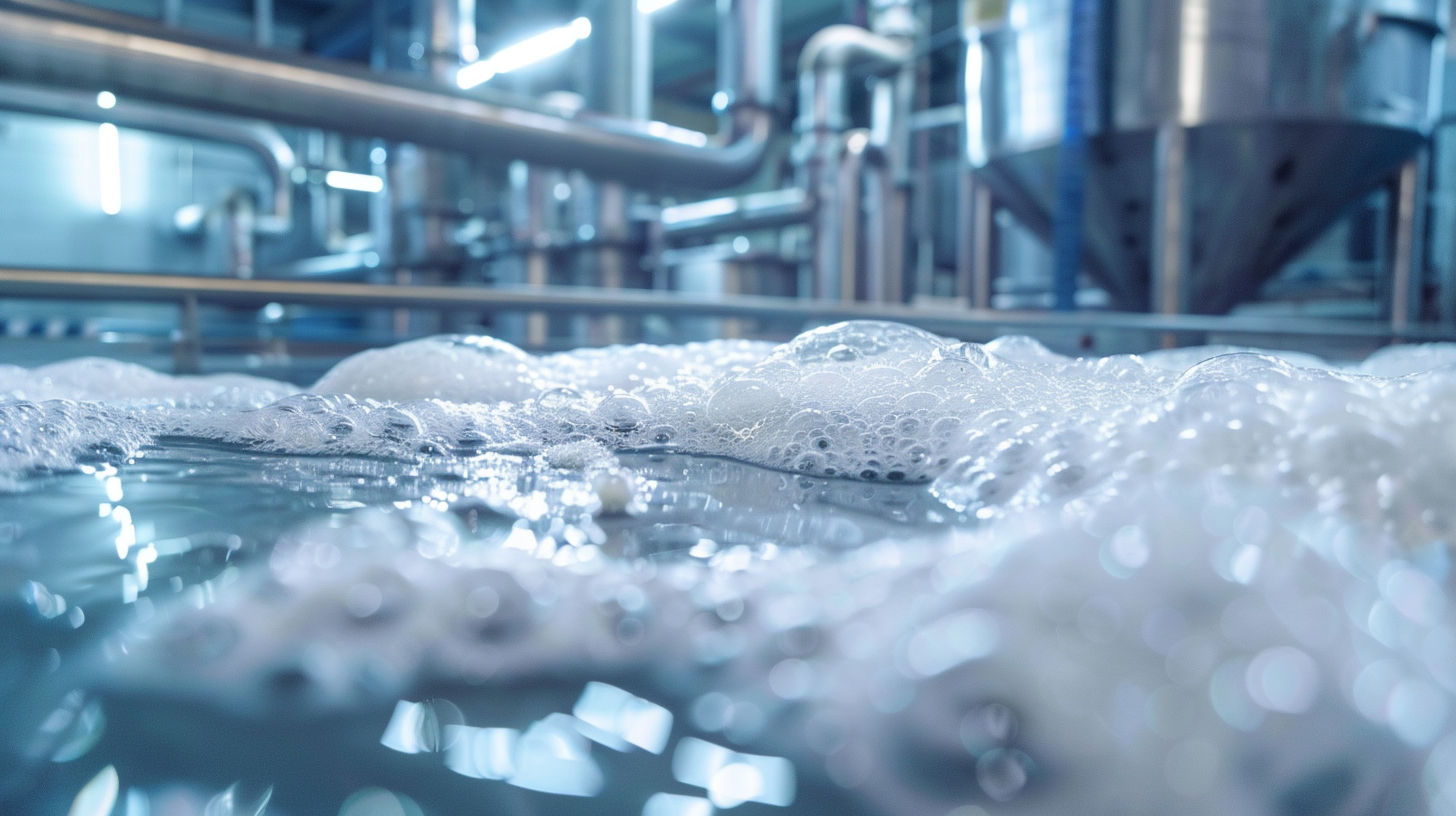
The primary function of silicone defoamers is to reduce and prevent formation of foam during the industrial processes. When these defoamers are spread across the surface of the foam bubble, it destabilizes and collapses them. They are considered ideal across various sectors due to their efficiency and effectiveness. Silicone defoamers are widely used in sectors such as wastewater treatment, paper manufacturing, food manufacturing and chemical production. Silicone defoamers tend to enhance the efficiency of the process, improve the quality of the product and prevent equipment damage by preventing foam formation.
Working of Silicone Defoamers
- Mechanism of Action: Silicone defoamers are spread over the surface of the foam bubbles. This destabilizes the foam and cause them to collapse. They prevent the new foam from forming up and break down the existing foam leading to the smooth operation of industrial processes.
- Chemical Properties: Silicone defoamers possess unique chemical properties such as low surface tension and hydrophobic characteristics. These properties allow the defoamers to spread evenly on the foam surface and disrupt the foam structure.
Types of Silicone Defoamers
Below stated are the 3 main types of silicone defoamers:
- Polydimethylsiloxane (PDMS): PDMS is a widely used silicone defoamer known for controlling and stabilizing the strong foam. This type of silicone defoamer is suitable for applications like brewing and food processing.
- Silicone Emulsions: Silicone emulsions are usually water-based and provide effective foam control. They are really easy to handle. They are considered ideal for food processing units and other sensitive applications due to their safety profile.
- Silicone Oils: Silicone oils are more suitable for high-temperature applications where low surface tension is required. They are used in various industrial settings for effectively controlling the foam.
Correct Time to Add Defoamers
Defoamers can be added at different stages of the process that are stated below:
- During Manufacturing: Usually, foam is formed when the pigments and resins are mixed. At this stage, adding a silicone defoamer can prevent foam formation in early stages.
- Before Packaging: The paint should be bubble-free before it is packed. Thus, silicone defoamer is added before packaging to avoid issues during storage.
- During Application: Sometimes, it is advisable to use a defoamer agent before spraying or rolling. This is necessary to reduce foam formation on walls.
Advantages of Silicone Defoamers
Below stated are some of the advantages of silicone defoamers:
- High Efficiency at Low Dosage: Silicone defoamers tend to collapse the bubbles effectively at very low concentrations making them highly cost-efficient. These concentrations are usually in the ppm range.
- Broad Spectrum of Application: Silicone defoamers are compatible with both aqueous and non-aqueous systems. They are also resistant to various chemical conditions making them ideal for various industrial sectors.
- Thermal Stability: Silicone defoamers can withstand extremely high temperatures without any significant decomposition. This makes it essential for processes that operate under extremely heated environments.
- Physiological Inertness: Silicone defoamers are usually non-toxic and biologically inactive making them safe and ideal for food processing units, pharmaceuticals, and personal care products where proper formulation is a necessity.
- Chemical Stability: Silicone defoamers are resistant to chemicals. This property of silicone defoamers ensures that they do not react with or degrade the systems.
Using the Silicone Defoamers Effectively
Below stated are the processes to use silicone defoamers in an effective manner:
- Pre-Mix: It is advisable to use the concentrated silicone defoamer after mixing it with a compatible liquid before adding it to the process. This pre-mixing enhances the dispersion and effectiveness of the defoamers.
- Monitor Dosage: The dosage of silicone defoamers should start from the lowest level and then gradually increase it according to the need. This prevents overuse of the defoamer and reduces potential residue problems.
- Test the Compatibility: It is important to conduct a compatibility test before starting a full-scale application. This helps in ensuring that the silicone defoamer won’t have a negative impact on the product.
- Follow Manufacturing Guide: It is important to always refer to the manufacturer’s recommendations about usage, dosage and correct application methods to achieve the desirable results.
Optimizing Tips for Using Silicone Defoamers
- Maximizing Effectiveness: Silicone defoamers should be applied at parts where foam forms more rapidly for more effective results. The concentration should be adjusted based on the conditions of the process to achieve optimal defoaming.
- Best Practices: Apart from following the manufacturer guidelines, it is also advisable to monitor the foam levels regularly and adjust the defoamer usage as needed. This helps in maintaining efficiency of the process and integrity of the product.
How to Choose the Correct Defoamer for One’s Application
Selection of the correct silicone defoamer is considered an essential step to ensure smooth and effective production processes in various industries. Various factors should be kept in mind while choosing the silicone defoamers. These factors include the properties, applications and key factors of the processes. Use of the correct silicone defoamer improves the quality and efficiency of the application. The decision of choosing the silicone defoamer is important in sectors such as food processing, pharmaceuticals and wastewater treatment.
Take AwayThis is the brief explanation about silicone defoamers, its working, types, advantages and correct time to add it. There are also few tips for using silicone defoamers effectively and how to choose them correctly. We hope this information will be effective for you. Please let us know through your valuable feedback and the suggestion in the drop box.