Introduction
Silicone defoamers have become an essential part of the wastewater treatment industry due to their superior performance, excellent compatibility with the environment, dual defoaming and effective foam control. They are now widely used in the wastewater treatment sector because of their adaptability with various aqueous systems and proven effectiveness. They are also considered a key foundational material in various wastewater treatment systems.
Basic Function of Silicone Defoamers
The basic function of a silicone defoamer is to rapidly eliminate or suppress the foam formation and ensure stable, continuous and efficient operations. Apart from silicone defoamers, other types of anti-foaming agents are mineral oil-based, alkyl alcohol-based and polyether-based. However, silicone anti-foaming agents are replacing traditional defoaming products because of their unique silicone chemistry and excellent comprehensive performance. Silicone-based defoamers can efficiently reduce the foam and stabilize the wastewater treatment processes which leads to improvement in the efficiency of the process and product quality and makes silicone defoamers a first choice in the industry.
Composition and Mechanism of Silicone Defoamers
Silicone defoamers are mostly made up of polydimethylsiloxane (PDMS) and other silicon-based polymers. These raw materials are combined with emulsifiers, carriers, solvents, etc. and form different formulations such as silicone emulsions, oil dispersions or powders. The versatility of these defoamers allows them to be used in a wide range of wastewater treatment applications. The core composition of these silicones is Si-O-Si chain-like skeleton combined with hydrophobic organic groups. This unique composition results in low surface tension and exceptional hydrophobic and anti-foaming capability.
Advantages of Silicone Defoamers
Below stated are some of the key advantages of silicone defoamers:
- Rapid Defoaming Action and Long-Lasting Effectiveness: Silicone molecules have extremely low surface tension and they can quickly penetrate the surfaces of foam membranes achieving instant defoaming. Also, it forms a hydrophobic barrier layer that can maintain defoaming effects for a longer period of time and reduce the chances of reapplication in many industrial processes.
- Strong Adaptability and Resistance to High Temperatures: Silicone antifoams tend to remain active regardless of change in pH levels and concentrations. It also provides stability across a wide range of pH level (0-14) and in high temperatures (up to 150 °C). This makes them suitable for both aqueous and non-aqueous systems.
- Excellent Dispersibility and Low Concentrations: Silicone defoamers tend to require extremely low concentrations that usually ranges from 20-200ppm to achieve superior defoaming and antifoaming effects. Their strong dispersibility allows them to distribute rapidly within the system which maximizes their efficacy and improves the overall performance.
- Non-Toxic and Environment Friendly: High-purity organic silicone materials are highly biocompatible, non-toxic and odorless. They do not produce any harmful byproducts and also don’t pollute water bodies and downstream environments. These materials fulfil stringent environmental regulations and their certain products are used in food grade for applications such as carpet extractors and indirect food contact.
- No Adverse Effect During Subsequent Treatment Processes: In comparison to traditional mineral oil-based or emulsion-based defoamers, silicone defoamers do not cause oil sludge suspension or equipment blockages. They also don’t impair the effectiveness of the treatment in processes such as flocculation, sedimentation or filtration. Thus, silicone defoamers are considered ideal for various applications in the wastewater treatment sector.
- Diverse Product Formulations and Strong Process Compatibility: Silicone defoamers can be formulated into various types such as silicone emulsions, oil or foam powder as per the process requirements. They are also compatible with automatic dosing, manual addition and online continuous treatment methods. Their flexibility ensures sufficient process adaptation in various industrial processes.
Applications of Silicone Defoamers in Wastewater Treatment
Below stated are some of the key applications of silicone defoamers in wastewater treatment sector:
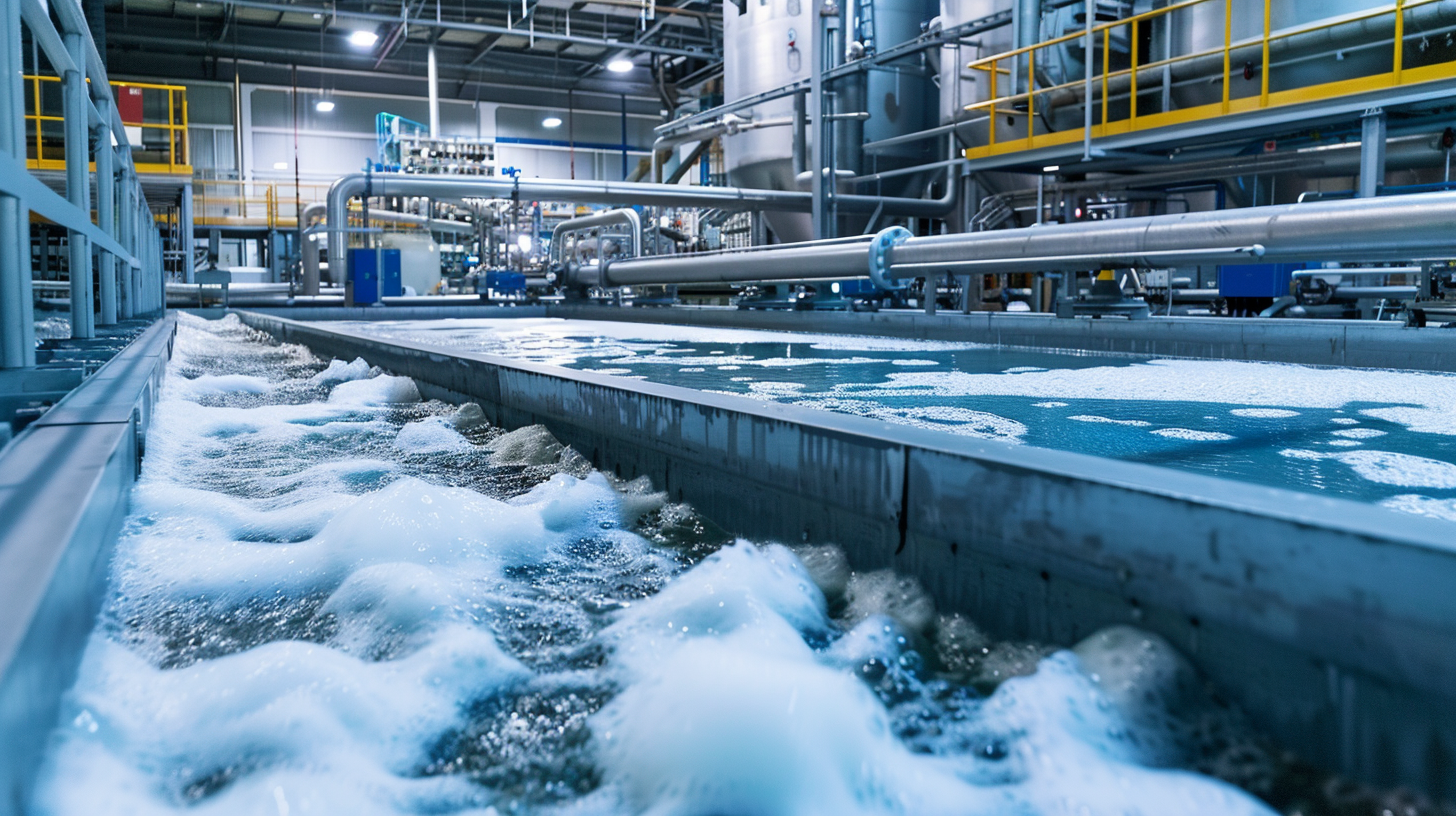
- Municipal Wastewater Treatment Plans: Municipal wastewater contains large portions of surfactant sludge, proteins and fats. This leads to excessive foam formation on the surface of the aeration and biological treatment tanks. Silicone defoamers can quickly eliminate this foam and stabilize the aeration and other secondary tank operations. This improves effluent water quality and plant capacity.
- Industrial Wastewater Treatment: Industrial wastewater usually includes fields such as petrochemicals, electroplating, dyeing, papermaking, pharmaceuticals, leather, etc. Such sectors may contain organic compounds, surfactants, emulsion, foaming agents, etc. which can result in to persistent foam. Silicone defoamers deliver extremely fast defoaming and long-term suppression which makes them ideal for tough and complex systems of various industrial processes.
- Chemical Cleaning and Circulating Water Treatment: In circulating water systems and chemical cleaning across various sectors, foam formation is very common due to scale inhibitors and detergents. Silicone defoamers provide excellent foam control and dispersibility which improves the heat exchange and equipment safety.
- Biorefinery and Pharmaceutical Wastewater: Wastewater from biopharmaceutical and brewing industries generates severe foam due to microbial metabolism and high organic materials. Silicone defoamers, being a weak antibacterial, are preferred medium for these sensitive and critical waste treatment applications.
- Textile, Dyeing and Papermaking Wastewater: Silicone defoamers are known for providing excellent foam control in sectors like textile, dyeing, paper mills and industries having washing tanks and sedimentation ponds. They also help in reducing energy usage and breakage rates.
- Other Special Water Treatment Fields: Various other fields such as landfill, agriculture, sea-water desalination, etc. consider silicone defoamers a main solution due to their environment-friendliness and excellent performance across a wide range of products.
Take Away
This is the brief explanation about silicone defoamers, its basic functions, composition, advantages and applications in wastewater treatment systems. We hope this information will be effective for you. Please let us know through your valuable feedback and the suggestion in the drop box.