
Introduction
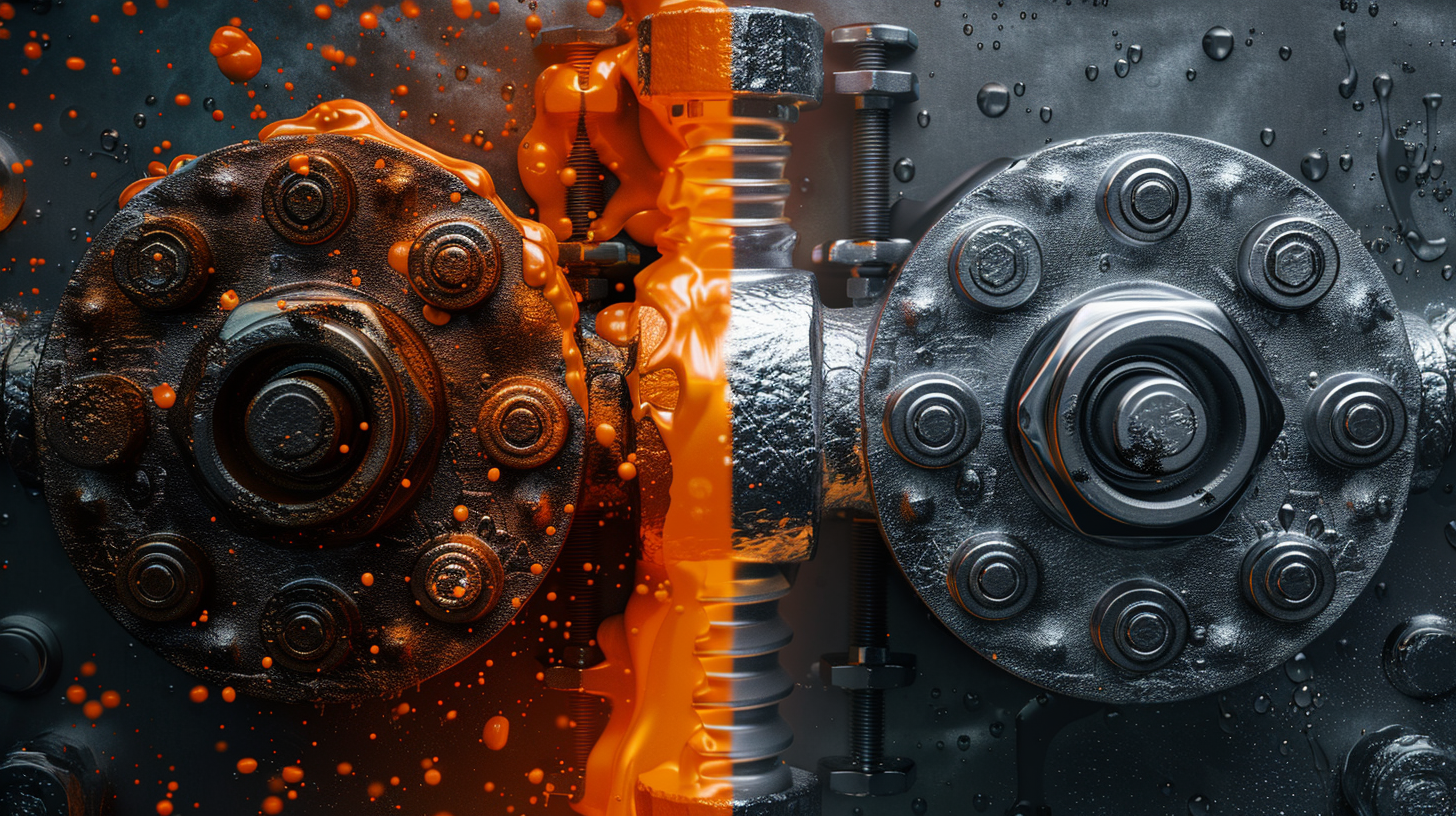
Copper grease and Aluminium anti-seize are one of the most important parts of automotive workshops and industrial maintenance facilities. They might look similar at the first glance as both are applied to fasteners and threaded components to prevent seizing, galling and corrosion. However, they both have distinct compositions, temperature capabilities, material comparisons, and ideal use cases. It is important to choose the correct option among them as choosing the wrong option can lead to galvanic corrosion, accelerated wear, premature fastener failure or damaging of sensitive components.
Copper Grease
Copper grease is formulated with fine copper particles, suspended in a high-temperature grease base and combined with graphite. This grease tends to form a barrier on the surface of the fasteners, when applied on them and prevent the occurrence of seizing and galling.
- Temperature Performance: Copper greases have a high temperature tolerance in comparison to aluminium grease. Their temperature tolerance capacity ranges about 1,000°C. Thus, copper grease is considered an ideal choice for extreme heat applications such as exhaust manifolds, turbocharger bolts and high-temperature flanges.
- Material Compatibility: Copper anti-seizes tend to work best on carbon steel. If they are applied on stainless steel, it may lead to inter-crystalline corrosion and cracks. Thus, copper grease is considered an ideal choice for steel-to-steel assemblies in the automotive sector and industrial applications such as nuts, exhaust studs and chassis bolts.
Key Applications of Copper Grease:
Below stated are some of the key applications of copper grease in the industrial sector:
- Exhaust Systems: Parts of exhaust systems such as manifold bolts, exhaust studs and downpipe connections are subject to extreme heat cycling that tend to exceed the temperature bearing capacity of aluminium-seize. Thus, copper grease is used for these applications.
- Brake Components: Copper grease is applied widely on brake calliper slide pins, calliper bracket bolt and brake pads. Its ability to withstand the heat generated during the heavy braking makes it a suitable choice. However, it must not be applied on friction surfaces or brake pad contact areas.
- Spark Plugs in Steel Cylinder Heads: Copper grease is applied on spark plug threads of the steel and cast-iron engine blocks to prevent them from seizing during the intense heat cycles of the engine operation.
- General Carbon Steel Fasteners: Copper grease prevents threaded fittings and fasteners from seizure, freezing and heat making it ideal for sensors, bolts, valves, nuts and pumps in harsh conditions.
Aluminium Anti-Seize
Aluminium anti-seize is formulated with micro-seized aluminium particles. They may or may not be blended with graphite particles or suspended in a grease base. The biggest selling point of aluminium anti-seize is safety as it can be applied on the parts made up of non-ferrous metal without the risk of galvanic corrosion.
- Temperature Performance: The melting point of aluminium anti-seize is approximately 1,220°F. This means that any aluminium anti-seize compound’s effectiveness will be decreased below this temperature. Its effectiveness up to 1,600°F makes it ideal for general-purpose use in environments that do not tend to reach extreme heats. Aluminium anti-seizes are also used for everyday automotive work and moderate industrial applications.
- Material Compatibility: Aluminium anti-seize is considered a best reliable option when it comes to stainless steel. It saves the surface from inter-crystalline corrosion and cracks that appear due to application of copper anti-seize on the stainless steel. Thus, aluminium anti-seize is used in various industries like food processing, marine hardware and chemical industry fittings where stainless steel fasteners are common.
Key Applications of Aluminium Anti-Seize
Below stated are some of the key applications of aluminium anti-seize:
- Aluminium Engine Components: Aluminium anti-seize prevents galvanic corrosion between dissimilar metals like steel and aluminium which is a common issue in modern automotive applications as aluminium cylinder heads, intake manifolds and engine blocks are fastened by steel bolts.
- Spark Plugs in Aluminium Cylinder Heads: Aluminium cylinder heads are used commonly in modern engines. Thus, aluminium anti-seize is used for this purpose as it eliminates the risk of galvanic corrosion between the metals.
- Stainless Steel Fasteners: Aluminium anti-seize is used in various sectors like marine fittings, food-grade equipment, chemical plant piping, etc as the only safe choice for stainless steel and threaded assemblies.
- Cost-Sensitive Routine Maintenance: Aluminium anti-seizes are more affordable as compared to copper and are widely used in general maintenance. They also tend to deliver reliable results for high-volume workshop applications where extreme temperature performance is not a necessity.
Common Limitation of Copper Grease and Aluminium Anti-Seize
Copper grease and aluminium anti-seize share a common limitation that both should never be applied on moving parts such as bearings or friction surfaces like brake rotors and pads. Both the compounds are designed for stationary assemblies or parts that tend to move slowly. So, if they are applied to dynamic components, they will cause accelerated wear rather than preventing it.
How to Choose the Correct Option
- Choosing Copper Grease: One should opt for copper grease while working with steel-to-steel assemblies at high temperatures, exhaust components, brake hardware or grounding connections where electrical conductivity is either acceptable or a necessity.
- Choosing Aluminium Anti-Seize: One should opt for aluminium anti-seize while working with aluminium components, stainless steel fasteners, dissimilar metal assemblies where galvanic corrosion is a hazard or applications in electrical environments where conductivity of the joints should be minimized.
Take Away
This is a brief explanation about copper grease, aluminium anti-seize, their applications, common limitations and how to choose the correct option. We hope this information will be effective for you. Please let us know through your valuable feedback and the suggestion in the drop box.