
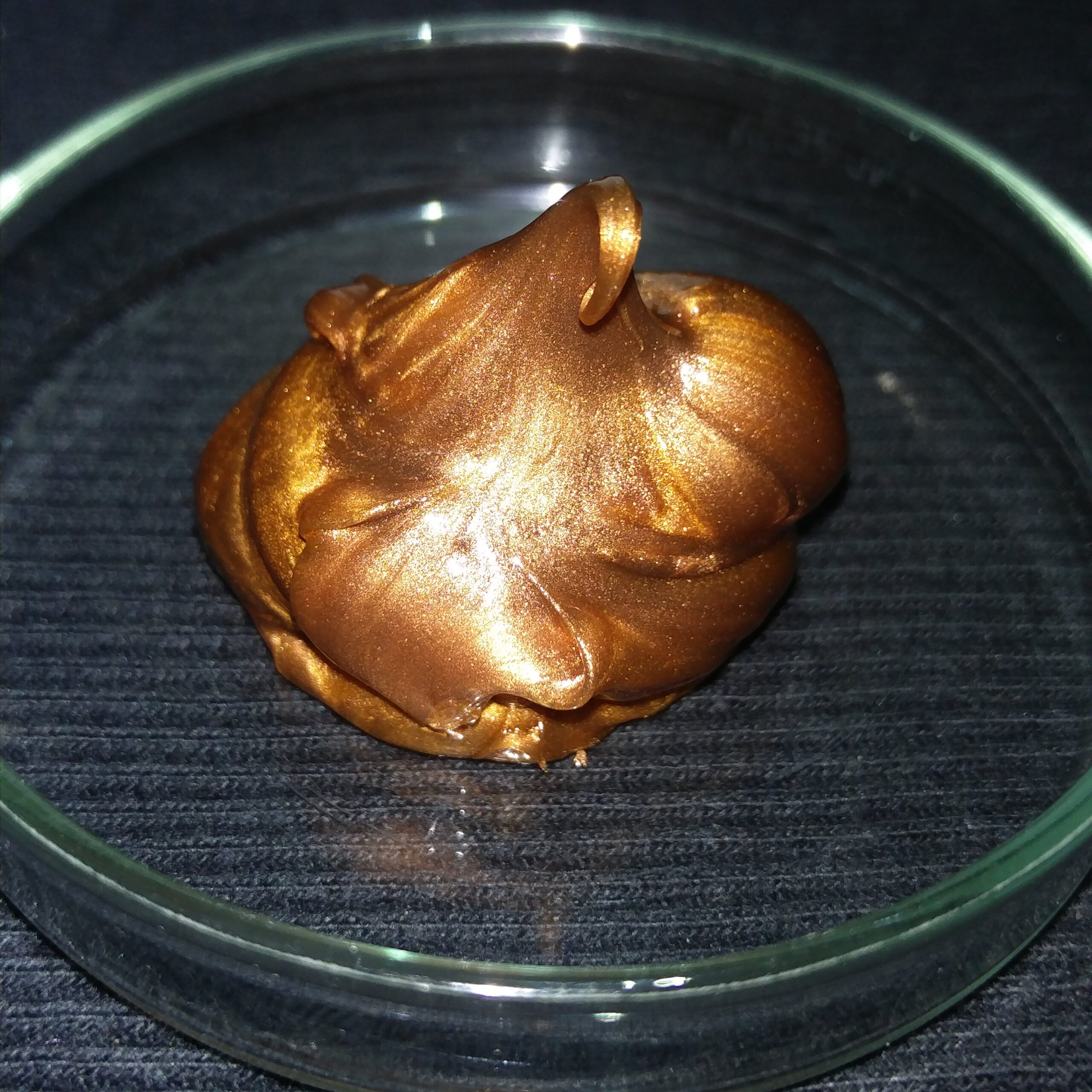
When we talk about chemical industries, copper grease prevails to be the ever-demanded product in the market. Its anti-seizure quality takes it to the place in the industry where it has become a must asked product.
While dealing with machines, we may come across a situation when we need a product which can withstand high temperature along with tackling wear specifically in the case of connecting screws. Our Copper grease is just the right choice for your machine. It is a kind of combination of copper particles and oxidation preventors.
Advantages of Copper Grease:
The greatest advantage given by copper grease is to get protection against corrosion and humidity as it gives advantage of being water-resistant gel.
It gives the best results, whatever is the weather. It is resistant to salt and chemical reactions.
It is a highly recommended product as it can handle high pressure and temperature.
The presence of metal particles in the grease assist to provide a very effective lubrication.
It can handle temperature ranging between 40 c to 1100 c.
Application:
Copper grease is mainly used for lubrication. It can be any attached part of the device like bearings with heavy duty, joints, pulleys, battery contacts, screws.
It is again advantageous to use copper grease in pipe fittings, valves, and chemical industry.
The threaded connections are mainly lubricated with copper grease
It is also ideal for nuts and bolts of wheels, flanges, studs.
Disc brake squeal can be removed with the help of this product.
FAQs on Copper Grease
What is copper grease and how is it different from normal grease?
Copper grease is a high-temperature, anti-seize compound containing fine copper (or metal) particles suspended in a grease base. It’s designed primarily to prevent nuts/bolts, threaded connections, and metal parts from seizing, galling, or corroding under heat, pressure, or harsh environments. Regular or “normal” grease, in contrast, is a general-purpose lubricant — intended for bearings, moving parts, hinges, etc., under typical temperature/pressure conditions. It lacks the metal particles and specialized additives, so its temperature tolerance, anti-seize, and corrosion-prevention properties are much less than copper grease. In short: use copper grease when you need anti-seize, high-temperature resistance or corrosion protection; use normal grease for everyday lubrication.
Where and when should you use copper grease? (Applications)
Copper grease is ideal for applications involving high temperature, heavy loads, corrosion risk or difficult-to-dismantle joints.
Typical uses include:
Threaded bolts/studs, nuts, fasteners in engine or exhaust systems — especially where future disassembly is needed.
Automotive components such as exhaust manifold bolts, brake caliper bolts (though with caveats), spark-plug threads.
Industrial machinery: flanges, shafts, large gears, heavy-duty bearings, press fits, where metal-to-metal contact + high temperature or corrosive environment exists.
Marine or outdoor equipment exposed to moisture, salt, or corrosive atmospheres — where anti-corrosion and water resistance help.
Use copper grease especially when you expect heat, corrosion, or difficulty in future disassembly.
What are the main advantages and limitations of copper grease?
Advantages:
High temperature resistance: Many copper greases handle extreme heat — up to around 1,100 °C (depending on formulation).
Strong anti-seize / anti-galling effect: Prevents threads and fasteners from freezing or fusing under heat/pressure.
Corrosion & rust protection: Copper particles + special additives protect metal surfaces from oxidation, rust and environmental attack (moisture, chemicals).
Washout / environmental resistance: Good resistance against water, chemicals, steam or saltwater — making it useful in harsh environments or marine use.
Limitations / cautions:
Not ideal for high-speed moving parts: Copper grease is optimized for static or slow-moving connections; its lubrication may be inadequate for dynamic components requiring good friction reduction.
Possible galvanic corrosion with some metals (e.g. aluminium): Using copper grease when dissimilar metals like aluminium are involved may lead to corrosion or “white deposits.”
Poor as “full-time lubricant”: While it offers some lubrication, it’s not a substitute for dedicated lubricating grease in many applications.
Messy / conductance risk: Because of metal content, it can be messy to apply; in some automotive contexts (e.g. near sensors, electronics) metal-based greases may interfere with electrical components.
How should copper grease be applied for best results?
Clean the surfaces thoroughly — remove rust, old grease/oil, dirt or moisture — before applying. This ensures good adhesion and effectiveness.
Apply a thin, even layer (not a thick glob) on the male thread or contact surface — enough to fill thread grooves or cover the mating surface.
After applying, assemble components to the required torque (if applicable). Wipe away any excess grease that squeezes out — to avoid contamination or mess.
Use copper grease only where needed — i.e. on static or semi-static threaded/metal parts. For bearings, moving joints, or dynamic parts, consider conventional (or specialized) lubricating grease.
Are there any metals or situations where copper grease should be avoided?
Yes — there are a few cautions:
Aluminium or other dissimilar metal assemblies: Using copper grease on/with aluminium can risk galvanic corrosion, leading to “white deposits” or corrosion spots over time.
Dynamic, high-speed or precision-moving parts: Copper grease is mainly intended for anti-seize/static joints; it may not provide adequate lubrication for bearings, rotating shafts, or moving parts under load or speed.
Sensitivity to electrical/electronic parts: Because copper is conductive, using copper-based grease near sensitive sensors or electrical/electronic components (especially under heat where the grease base may evaporate) could cause problems.
If your application involves such parts or metals — consider alternate greases (e.g. non-metallic, graphite-based, or ceramic-based anti-seize greases).