
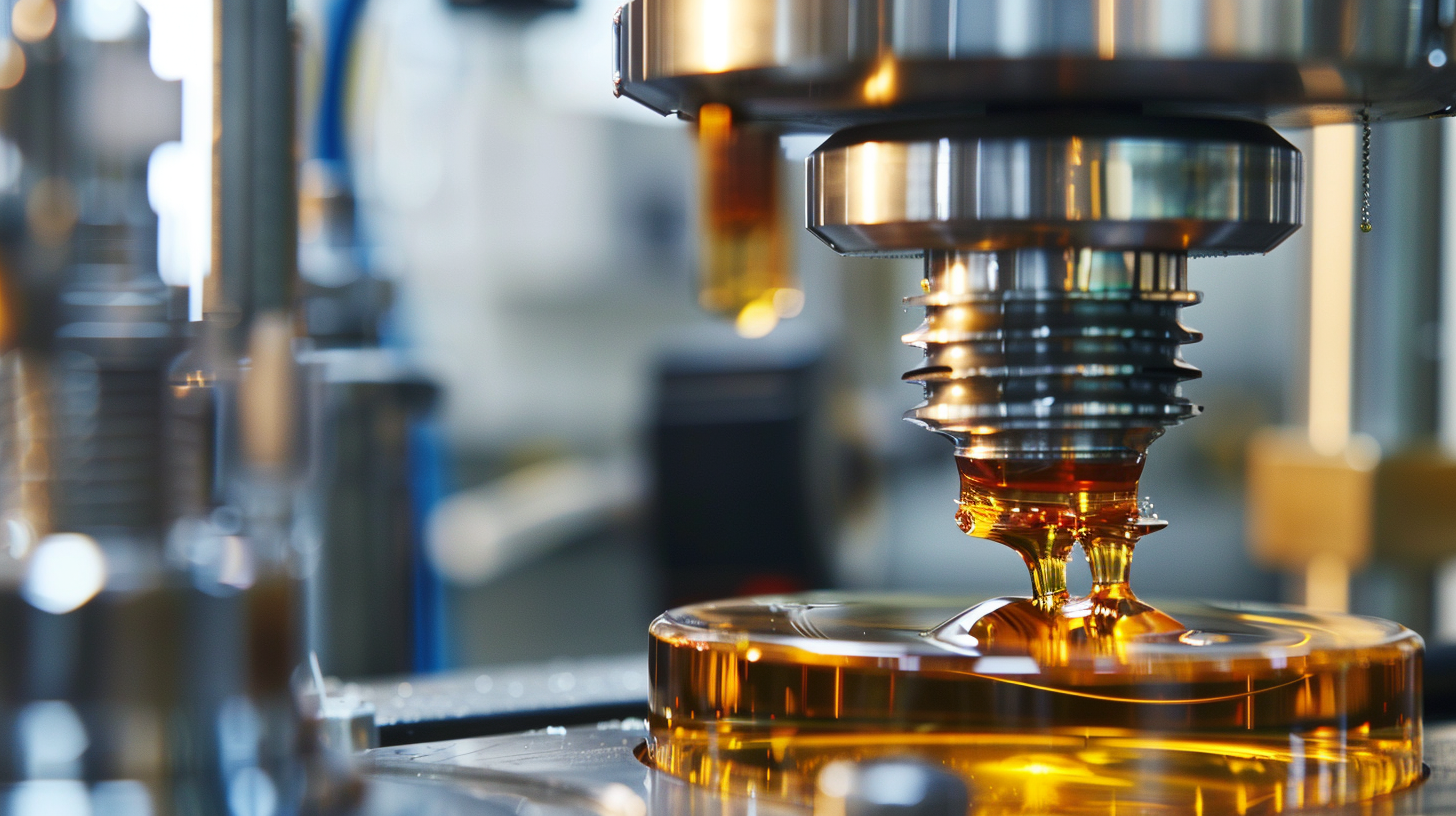
Silicone oil, silicone grease, and silicone rubber are three different physical forms of the same base silicone chemistry (polydimethylsiloxane, or PDMS), and each exists to do a different job. Silicone oil is a free-flowing liquid used for lubrication, heat transfer, and as a raw material for further formulation. Silicone grease is silicone oil thickened into a paste so it stays in place under gravity, pressure, or vibration. Silicone rubber is cross-linked into a fixed, solid, flexible shape and used for seals, gaskets, and moulded parts. Choosing between them comes down to one question: does your application need something that flows, something that stays put, or something that holds a fixed shape?
The Same Base Chemistry, Three Different Physical Forms
All three products share the same silicone (PDMS) backbone, which is what gives silicone-based materials their characteristic temperature stability, chemical inertness, and water repellency across products. What changes between oil, grease, and rubber is how that backbone is processed: silicone oil is used largely as-is in liquid form; silicone grease is the same oil combined with a thickener (often a silica or soap-based thickening system) to convert it into a stable paste; and silicone rubber is produced by cross-linking (curing/vulcanising) the silicone polymer chains into a solid, elastic network that holds its moulded shape.
Silicone Oil: Free-Flowing Lubricant and Base Fluid
Silicone oil is supplied across a range of viscosities and is chosen based on the required flow behaviour and temperature range of the application . Typical uses include:
- Lubrication where a liquid film, not a paste, is needed
- Heat-transfer and damping fluid in mechanical and electronic assemblies
- Mould release for rubber, plastics, and food-contact applications
- Raw material input for producing silicone grease and silicone emulsion
- Dielectric fluid in electrical insulation applications
Silicone Grease: A Thickened Oil That Stays in Place
Silicone grease exists because many applications cannot tolerate a lubricant that migrates, drips, or is squeezed out of the contact area. By incorporating a thickener into silicone oil, the product becomes a stable, non-flowing paste that stays exactly where it is applied. This makes it the preferred form for:
- O-rings, gaskets, and valve seals that need long-term lubrication without migration
- Vacuum systems and vacuum seals (see DRP Silicone's high- and low-vacuum grease guides)
- Electrical connectors and contacts, where the grease also provides a protective, water-resistant barrier
- Any joint or fitting where the lubricant must resist gravity, pressure, or vibration over time
Silicone Rubber: A Cross-Linked Solid
Silicone rubber is a different category of product altogether — a cured, solid elastomer rather than a fluid or paste. Cross-linking locks the silicone polymer into a fixed but flexible shape that can be moulded into gaskets, seals, tubing, and other formed components. It retains the flexibility, temperature stability, and chemical/weather resistance of the base silicone chemistry, but unlike oil or grease it does not flow, spread, or need to be reapplied — it performs its sealing or cushioning function as a solid part.
Decision Framework: Which Form Do You Need?
- Choose silicone oil if the application needs a flowing liquid — lubrication, heat transfer, damping, or as a feedstock for other formulations.
- Choose silicone grease if the application needs a lubricant or protective barrier that stays put — vacuum seals, connectors, valves, O-rings.
- Choose silicone rubber if the application needs a fixed, solid, flexible part — gaskets, seals, mouldings, and tubing.
Quick Comparison
| Form | Physical state | Stays in place? | Typical applications |
| Silicone Oil | Free-flowing liquid | No — flows/migrates | Lubrication, heat transfer, mould release, raw material |
| Silicone Grease | Thickened, non-flowing paste | Yes — stays in place | Vacuum seals, connectors, valves, O-rings, bearings |
| Silicone Rubber | Cross-linked solid, flexible | Fixed shape | Gaskets, seals, mouldings, tubing |
Viscosity/hardness figures and temperature stability ranges vary by grade. Confirm exact specifications for each product line against DRP Silicone's technical data sheets before publishing.
Frequently Asked Questions
Can silicone oil be used instead of silicone grease?
Only where the application can tolerate a liquid that may migrate away from the contact area. Where retention is important — vertical joints, vacuum seals, long-term connector protection — silicone grease is the more reliable choice because its thickener keeps it in place.
Is silicone rubber the same material as silicone grease?
No. They share the same base silicone chemistry, but silicone rubber is cross-linked into a solid elastomer, while silicone grease remains a soft, non-flowing paste. They serve different functions: rubber forms a fixed part, grease lubricates or protects a moving or sealed joint.
Which has better temperature resistance, silicone oil or silicone grease?
The underlying silicone base has similar inherent thermal stability in both, but the practical operating range of a grease can be influenced by its thickener system. Check the specific product's technical data sheet for the verified range.
Talk to DRP Silicone
Not sure which form is right for your application? Contact DRP Silicone's technical team for guidance on selecting the right silicone oil, grease, or rubber grade.
Internal linking suggestions (for publishing, not for the live post)
- Link to the existing viscosity-selection guide from the Silicone Oil section.
- Link to the existing high-vacuum vs. low-vacuum grease post from the Silicone Grease section.
- Position this as a pillar/entity page that the more specific product posts link back to.